News
From June 14 to 16, Zamora will become the capital of bread, grains, and flour
More than 50 bakers, flour industry executives, and grain experts from Spain, Portugal, Italy, Georgia, Argentina, and Andorra will examine the present and future of bread from the perspectives of gastronomy, science, agriculture, and cultural heritage.
The 1st Panfest International Bread and Flour Congress, taking place June 14–16, will cement Zamora’s status as the leading center of bread culture by hosting an event that will bring together more than fifty leading national and international figures to reflect on the present and future of one of the most universal foods in our culinary tradition.
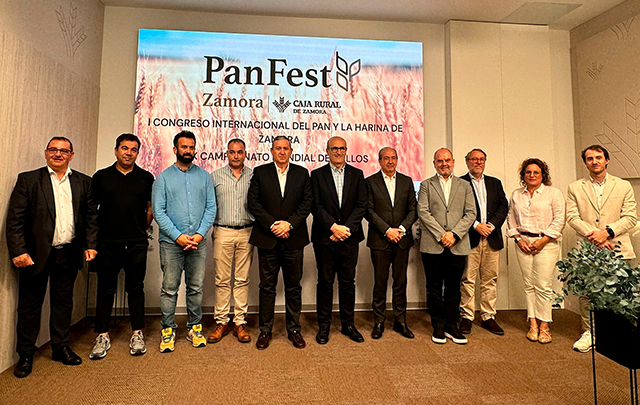
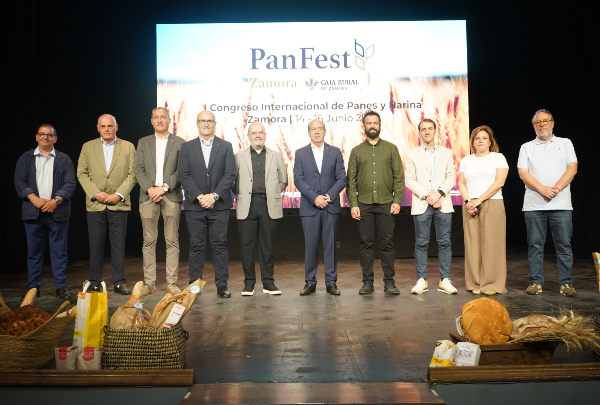
The official presentation of the congress took place at the headquarters of Caja Rural de Zamora—the event’s sponsor—and was attended by the president of the Zamora Provincial Council, Javier Faúndez; the deputy mayor of the City of Zamora, David Gago; the CEO of Caja Rural de Zamora, Cipriano García Rodríguez; and the CEO of Vocento Gastronomía, Benjamín Lana. All of them agreed that the PanFest project—organized by Madrid Fusión—will position Zamora as a major leader in the world of bread, thereby reinforcing the province’s grain-growing tradition. Following the first specialized symposium held last November and as a prelude to the major public event in the streets of the capital scheduled for September 2027—which will include the International Bread Cup, an international baking championship—the conference presented today aims to serve as a space for outreach, knowledge exchange, and multidisciplinary reflection.
9th World Tripe Championship
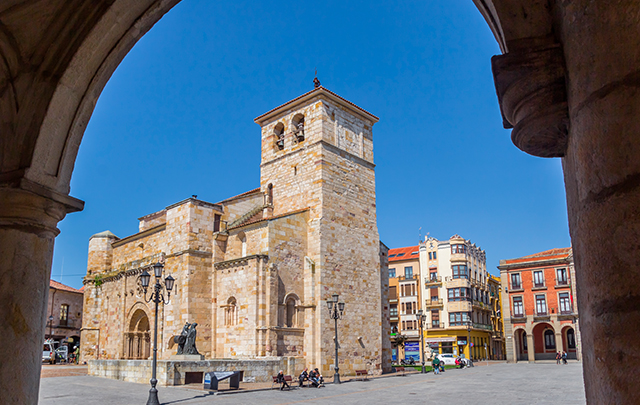
As a prelude to the congress, on Sunday, June 14, Zamora’s Plaza Mayor will host a major gastronomic event open to the public with the 9th World Tripe Championship, a well-established event that will bring together leading chefs and restaurants to compete for the best tripe dish. The finalists will be evaluated by a professional jury and a popular jury composed of 40 representatives of Zamora’s civil society, thereby strengthening the bond between gastronomy and the public. The event will be rounded out by a food fair where residents and visitors can enjoy tapas at affordable prices, transforming the city’s historic center into a space for gathering, celebration, and the promotion of culinary culture.
The conference, sponsored by Caja Rural de Zamora, will kick off on Monday the 15th at the Teatro Principal and will bring together some of the most influential figures in the baking world both within and outside Spain, such as Ibán Yarza, Spain’s leading bread expert; Ramón Garriga (Gluten Morgen), the most prominent Spanish-speaking baking expert; José Carlos Capel, president of Madrid Fusión and a leading figure in food journalism; María Ángeles Romero, director of Spain’s only Chair of Bread and Cereals; as well as Andalusian Domi Vélez and Portuguese baker Elisabete Ferreira, recognized as the world’s best bakers in 2021 and 2024, respectively. Joining them will be internationally renowned experts in the world of grains, such as Carlos Moreno, a driving force behind the revival of ancient wheat varieties through Despelta; the Georgian baker Zaza Ivanidze and his wife Tinatin Chilingarashvili, guardians of a grain-growing tradition recognized by UNESCO; and leading Michelin-starred chefs such as the Italian Giuseppe Iannotti, or the Spaniards Samuel Moreno, Marc Segarra, and Toño Rodríguez.
Also participating in this edition will be Ángel Ruiz, who runs the bakery in a village in Toledo considered the best in Spain this year; Xevi Ramón, a supplier from Triticum to some of the country’s most prestigious kitchens; the master of creative baking Daniel Jordà; and John Torres, one of the driving forces behind the revival of artisan bread in Madrid. Another of the great bakers of the last decade, Mario Ortiz (Brulèe), will arrive in Zamora from Andorra, while from Palma de Mallorca, Tomeu Arbona (Fornet de la Soca) will attend; from Córdoba, Florencio Villegas (La Tradición); from Santiago de Compostela, Guillermo Moscoso (Pan da Moa); and from Vitoria, Txema Pascual (Artepan). Representing Zamora itself will be Juan Carbajo, general manager of Molinos del Duero; Florindo Fierro, baker and instructor at La Escuela de Molinos; and baker Teodoro Fernández (El Molino, Santa María de la Vega). The world of PGIs will also be represented by Marcial Grela, president of the PGI Pan Galego de Santiago de Compostela, and Elena Huerta, president of the PGI Pan de Cruz de Ciudad Real.
Over two days, agriculture, gastronomy, science, cultural heritage, and innovation will converge in a program addressing the sector’s main challenges and opportunities. What role will bread play in the gastronomy of the future? Are we experiencing the golden age of baking? How is science advancing in the recovery of the identity of grains and flours? These are just some of the questions that will center the debate, which will bring together master bakers, Michelin-starred chefs, scientists, grain producers, communicators, and representatives of different baking cultures to analyze the transformations taking place in one of the most universal and symbolic foods in history.
Bread as a Field of Knowledge
The recovery of historic wheat varieties, agricultural biodiversity, the role of regional flours, the importance of terroir, new consumer sensibilities, the role of bread in contemporary society, and the recognition of this food as cultural heritage will be some of the main themes of the event.
The conference will also devote special attention to the relationship between bread and haute cuisine, a connection that is becoming increasingly relevant in top-tier restaurants, where bread has ceased to be a mere accompaniment and has become an essential element of the gastronomic discourse. The program will also address the business realities of artisan bakeries, new forms of baking creativity, applied scientific research, and the need to develop more sustainable production models using local grains and traditional varieties.
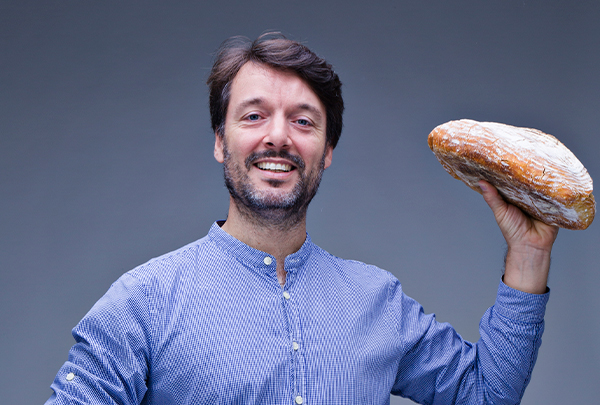
Ibán Yarza, Panfest Award 2026
Considered the public figure who has contributed most to transforming bread culture in Spain over the past two decades, Ibán Yarza will receive the Panfest Award 2026 during the conference. Yarza has spearheaded a true silent revolution that has introduced the general public to concepts such as sourdough and slow fermentation. Author of the most influential reference works on Spanish baking and translator of some of the fundamental texts in the international literature, his work has been instrumental in restoring bread’s social and gastronomic prestige.
One of the most interesting phenomena the conference will analyze is the impact of digital outreach on the sector’s evolution. Notable in this area is the participation of the Argentine Ramón Garriga, known globally as Gluten Morgen. With over five million followers, he has become the leading Spanish-language baker-influencer and a case study in how social media has helped democratize technical knowledge of baking.
The revival of ancient wheat varieties and traditional breads will be one of the conference’s central themes. Carlos Moreno, director of Despelta, is one of the leading figures in this movement in Spain. His work has demonstrated that the revival of historic varieties is not merely a matter of heritage preservation, but also a means of improving the sensory quality of breads. His expertise will help analyze the growing interest among bakers and chefs in distinctive flours capable of expressing the origin and characteristics of each region.
Georgia: When Bread Is Cultural Heritage
The cultural dimension of bread will find one of its most significant expressions through the participation of Zaza Ivanidze and Tinatin Chilingarashvili. Hailing from Georgia, one of the major historical centers of wheat domestication, they will share the experience of a country where bread remains an essential part of the national identity and whose grain-based culture has recently received recognition from UNESCO.
The dialogue between research and professional practice will be another defining feature of the event. María Ángeles Romero, director of Spain’s only Chair of Bread and Cereals, will provide a scientific perspective on issues related to flour quality, food technology, nutrition, and sustainability. Also sharing their expertise in this field will be Néstor Etxaleku, director of Business Development at the Espiga I+D Cereal Innovation Center (Navarra); and Elena Benavente, professor of Biotechnology and Plant Biology at the Polytechnic University of Madrid.
Bread in haute cuisine The presence of several Michelin-starred chefs will allow for an analysis of how bread has become a tool for gastronomic differentiation. Samuel Moreno, from Molino de Alcuneza* (Sigüenza), has built one of Spain’s most solid concepts around ancient wheat varieties and organic flours. Marc Segarra will showcase the unique model of Abadía Retuerta (Refectorio*, Sardón del Duero), where bread-making begins with the cultivation of the grain itself. For his part, Toño Rodríguez (La Era de los Nogales*, Sardas) will offer the perspective of a chef who has decided to expand his culinary project by also opening a bakery.
Special attention should be given to the presentation by the Italian Giuseppe Iannotti (Krèsios**, Telese Terme), one of the most creative figures in contemporary European cuisine, who will shine a light on another of the great worlds derived from grain: pasta and the role of semolina in its production.
Zamora, a natural setting to lead the culture of bread
The choice of Zamora as the venue for the conference is no accident. Few Spanish provinces have such a deep connection to grain, milling, and bread-making. The historic “Land of Bread,” the milling heritage associated with the Duero River, and the existence of initiatives such as “Harina Tradicional Zamorana” make the province a prime setting to lead a discussion of national and international scope.
With PanFest, Zamora aims to position itself as a permanent meeting place for all stakeholders in the bread supply chain, from the farmer to the end consumer, highlighting the cultural, economic, gastronomic, and social value of one of the fundamental foods in our history.
Related news
News
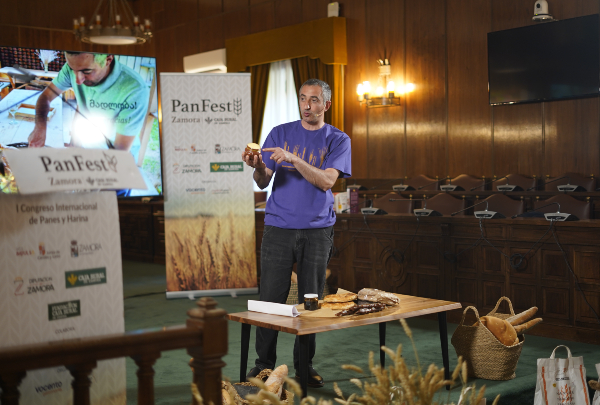
PanFest celebrates bread as living heritage, providing a space where people can come together and foster a sense of community.
Zamora brought the first International Bread and Flour Congress to a close by committing to forge a knowledge network across different trades in order to safeguard bread-making culture.
News
At PanFest, millers and bakers are calling for knowledge to be shared in order to preserve and promote Spanish artisan bread.
“Like wine, bread must reflect the land from which it comes.” The baking industry is calling for a commitment to identity and local wheat varieties, as well as products that are linked to the local terroir.
News
The journalist Ibán Yarza will receive the 2026 PanFest Award
This award recognises individuals in the sector who have contributed to improving the quality of bread and flour, and who have promoted this essential product.
News
A popular food fair and the 9th World Tripe Championship kick off PanFest
The World Tripe Championship, sponsored by Chef Pedro Martino, has chosen PanFest to host its ninth edition.
News
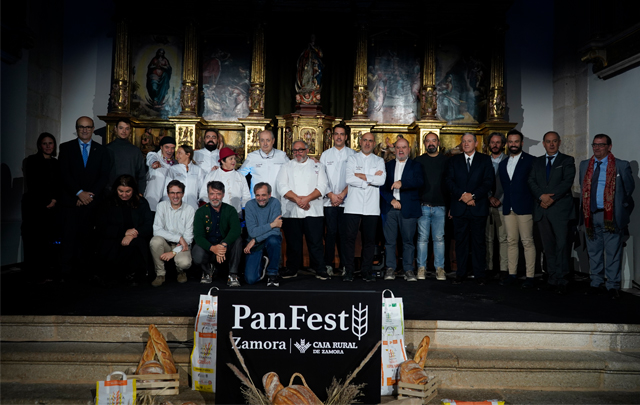
Zamora is hosting the First Bread and Flour Symposium, a prelude to the major PanFest 2027
This inaugural symposium will highlight the role of bread in haute cuisine, featuring several chefs who champion the culinary value of this product, including Samuel Moreno and Luis Alberto Lera.
News
PanFest was created with the goal of establishing Zamora as the world capital of quality bread and flour
The project brings together farmers, millers, bakers, and chefs to promote high-quality flour and bread as part of our cultural heritage.