News
PanFest celebrates bread as living heritage, providing a space where people can come together and foster a sense of community.
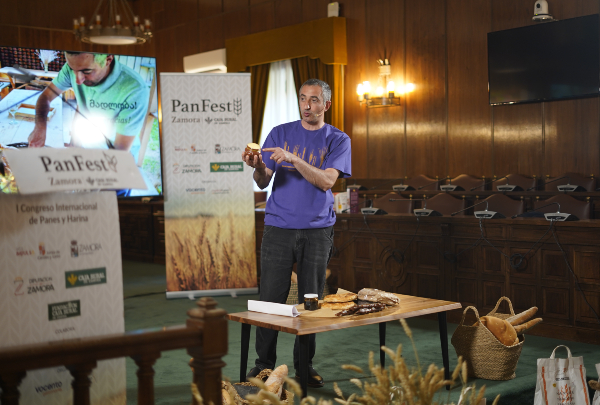
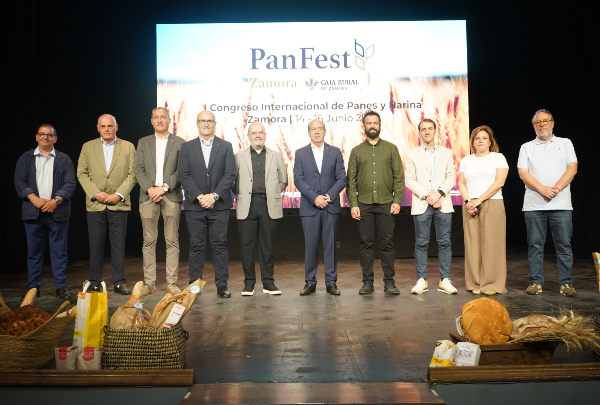
Zamora brought the first International Bread and Flour Congress to a close by committing to forge a knowledge network across different trades in order to safeguard bread-making culture.
The first edition of the International Bread and Flour Congress, organised by Madrid Fusión and sponsored by Caja Rural de Zamora, has come to a close in Zamora. The event has cemented the commitment to creating a network of bakers, millers, farmers, scientists and other stakeholders in the bread industry, with the aim of championing baking culture, cereals and flours. The event brought together disparate trades over the course of three days to create a shared identity capable of transforming the sector, reinforcing professional pride and restoring bread to its status as shared heritage.
The first part of the second day of PanFest, held in the plenary hall of the Zamora Provincial Council, saw history and baking communities take centre stage. Three very different presentations came together around a single idea: that every loaf of bread tells a part of the story of different civilisations and the cultural traditions passed down through the ages. From ancient Mediterranean rituals to digital communities of bakers and the preservation of ancestral wheat varieties in Georgia, the presentations demonstrated that bread remains an essential element of collective identity.
The event was opened by journalist José Carlos Capel, who offered an anthropological perspective on spring breads and their symbolic significance. He emphasised that spring breads are not a coincidence, but rather the embodiment of ancient rites intended to invoke life, fertility, and the renewal of nature after winter. He explained how his research had revealed that many bread-making traditions retain traces of ancient beliefs linked to the cycles of nature, fertility and religious devotion. In this context, bread ceased to be merely food and became a symbol. He highlighted the 'pan lagarto' from Medina del Campo, which is associated with spring and the renewal of the skin in popular imagination; the Castilian 'hornazos', particularly those from Salamanca, which are made with egg and Guijuelo sausage as a fertility symbol; the 'mona de Pascua' in Catalonia and Valencia, which are originally egg-based breads linked to renewal rituals and godparenthood; and plaited breads, which are associated with Jewish communities and the end of periods of dietary restriction such as Lent. He also mentioned horn-shaped breads, such as those from San Blas in La Rioja or the Galician 'cornichos', which are linked to the idea of generative power. He also mentioned circular baked goods, such as 'tortas', 'filloas' or 'roscones', which refer to the solar cycle.
Ramón Garriga, an Argentine populariser and baker, approached bread from a contemporary perspective, considering its capacity to build community through social media. His personal story reflects how a hobby can become a means of global connection. After leaving the world of high-end music production, Garriga began baking out of passion and curiosity, and social media enabled him to connect with bakers from different countries and become part of an international community.
The Argentine author explained that the history of bread has always been associated with exchange. From the earliest human settlements, ovens were places where people gathered to share knowledge and experiences. According to Garriga, the internet has transformed the way bakers share their expertise because, unlike books or television, social media enables direct communication between individuals. “The interesting thing about this online community is that anyone can learn, contribute, or ask questions. A space for constant exchange has been created, through which knowledge circulates among bakers all over the world.” However, he warned of the impact of artificial intelligence on content creation through a live demonstration in the auditorium itself, given how easily it can generate recipes, which may lead to a loss of authenticity. In the face of artificial perfection, he championed the two key ingredients of his unique recipe for building baking communities: passion and perseverance.
A third perspective came from Georgia, where Zaza Ivanidze, a baker and farmer and the owner of Agritourism Farm Ambari in Grehli, championed the importance of traditional wheat and the culture of bread in his country. This has been recognised as Intangible Cultural Heritage of Humanity for many years. The best baker in the Meskhetia region — historically regarded as Georgia’s breadbasket — explained the richness of the native wheat varieties, which possess unique qualities thanks to their climate resilience, genetic diversity, and distinctive flavours. He emphasised that ‘the revival of these varieties has been made possible thanks to the work of farmers, associations and conservation projects’. Zaza Ivanidze recalled that traditional Georgian bread remains closely linked to rural life, and explained that at his traditional bakery, he welcomes visitors, runs workshops, and preserves baking techniques handed down from previous generations.
The round-table discussion asked whether we are making the best bread in history and brought together professionals from across the country to reflect on the current state of the bakery sector, its challenges, and how it has evolved. Those taking part in the debate included Elena Huertas, president of the 'Pan de Cruz de Ciudad Real' PGI; Teodoro Fernández, a third-generation baker from Zamora; Txema Pascual, manager of a bakery in the Basque Country; and Marcial Grela, president of the 'Pan Galego' PGI.
From the outset, it was clear that the bakery sector is undergoing a period of profound change, characterised by new consumer trends, greater technical training, and the globalisation of processes and tastes. A key topic of discussion was the difficulty of defining ‘the best bread’. For some, such as Teodoro Fernández, 'the best bread is the one that each baker makes with conviction, tailored to their customers and their context'. From this perspective, excellence is relative to the identity of each bakery and its relationship with the consumer.
Txema Pascual emphasised that more knowledge and tools are available than ever before, enabling improvements in bread quality. However, he also warned of the risk of homogenisation. In his speech, he emphasised the importance of preserving the identity of each region. Along these lines, Marcial Grela highlighted the value of quality labels such as the Pan Galego PGI, which are designed to protect a product, a region, a history, and a way of doing things.
He explained that these certifications help to prevent fraud and preserve authenticity in the face of imitations, although he also acknowledged the need to adapt to changes in consumer habits and market demands. Elena Huertas championed the work of the Pan de Cruz de Ciudad Real PGI, highlighting its centuries-old history and cultural significance, including its association with Don Quixote. She emphasised that such labels do not seek to exclude other breads, but rather highlight those that meet specific production criteria.
Training was another key focus of the discussion. The speakers agreed that the professionalisation of the sector has increased significantly in recent decades, with more training institutions, greater knowledge sharing, and bakers who are more open-minded. The demographic challenge and rural depopulation were also addressed, issues which are particularly relevant in regions such as Castile and León and Galicia. Concerns were raised about the difficulty of finding staff and keeping bakeries open in small villages. However, the social role of the baker as a key figure in community life was also emphasised.
In his speech, Carlos Moreno, a partner and director at DeSpelta in Palazuelos, Guadalajara, Spain, emphasised the strategic importance of conserving agricultural biodiversity as the basis for future food security. Using specific examples, he framed the debate around the need to protect and revive traditional cereal varieties as an alternative to an intensive agricultural model based on commercial seeds. He highlighted the value of traditional cereals such as rye and 'negrillo' wheat, which have historically adapted to difficult conditions and are now being revived for their resilience.
He spoke of seed banks as essential structures for preserving genetic heritage, citing the large global ‘black box’ at Svalbard in Norway as an example of how people are more aware of what lies beyond their borders whilst overlooking Spain’s National Seed Bank. Situated between Meco and Guadalajara, this facility conserves 80,000 seed varieties under controlled conditions. Moving beyond laboratory conservation, Moreno emphasised that 'true biodiversity is kept alive in the field'.
The second session of PanFest came to a close with a round-table discussion on science, featuring Mª Ángeles Romero (Director of the Chair of Bread), Elena Benavente (Professor of Genetics at the Polytechnic University of Madrid), Néstor Etxaleku (Director of Business Development at the Espiga I+D Cereal Innovation Centre in Navarre) and Sandra Pérez Quirce (PhD in Agri-Food Industries from the Castile and León Cereal Technology Centre in Palencia). The discussion was moderated by Esperanza Peláez, Director of 7 Caníbales.
Mª Ángeles Romero commented that, at the Chair of Bread, they carry out consumer studies which reveal an increase in the consumption of ultra-processed foods, including bread. However, there is a glimmer of hope because people are becoming more concerned about the origin of food and their health. We must capitalise on this to highlight the nutritional properties of traditional breads. We do not communicate what we do effectively. All the stakeholders involved need to work more closely together”.
Elena Benavente also expressed optimism about the future of bread and flour. Referring to the FAO study, she pointed out that the proportion of wheat used for human consumption will remain significant, even exceeding that of rice, by 2030. The panel also addressed the issue of the disconnect between science, industry, and consumers. It was emphasised that the knowledge exists, but that it is not always communicated effectively. This contributes to misinformation and a poor perception of bread in certain contexts, particularly given the rise in popularity of ultra-processed foods. The discussion also turned to the baker of the future, with the importance of training being emphasised. This professional will need to have a solid foundation in the artisan craft, as well as knowledge of chemistry and new technologies. It was also emphasised that this baker will be proactive and innovative, and capable of adapting to rapid changes in consumer behaviour and the market. They will also need to communicate more effectively: they will not only produce bread, but also explain to consumers what they are doing, why they are doing it and the value of their product. For example, they will need to be able to explain long fermentation processes or the differences between flours.
The conference was brought to a close by Narciso Prieto, Director of Institutional Relations at Caja Rural de Zamora; Benjamín Lana, Director of PanFest; and Javier Faúndez, President of the Zamora Provincial Council, who emphasised 'the desire to make Zamora a leading centre for bread and flour, understood as a product, a culture, and an opportunity for development'. Earlier, Benjamín Lana had expressed his belief that 'PanFest can become a growing meeting point over the years, establishing a stable, visible community that is proud of its work'. He also emphasised to those present the importance of 'standing up for the craft' and raising its profile in the face of the invisibility that usually characterises artisanal work. He championed bread as the result of a chain of processes.
Related news
News
At PanFest, millers and bakers are calling for knowledge to be shared in order to preserve and promote Spanish artisan bread.
“Like wine, bread must reflect the land from which it comes.” The baking industry is calling for a commitment to identity and local wheat varieties, as well as products that are linked to the local terroir.
News
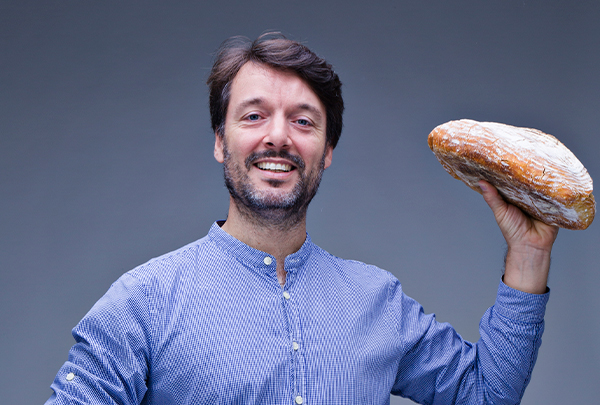
The journalist Ibán Yarza will receive the 2026 PanFest Award
This award recognises individuals in the sector who have contributed to improving the quality of bread and flour, and who have promoted this essential product.
News
A popular food fair and the 9th World Tripe Championship kick off PanFest
The World Tripe Championship, sponsored by Chef Pedro Martino, has chosen PanFest to host its ninth edition.
News
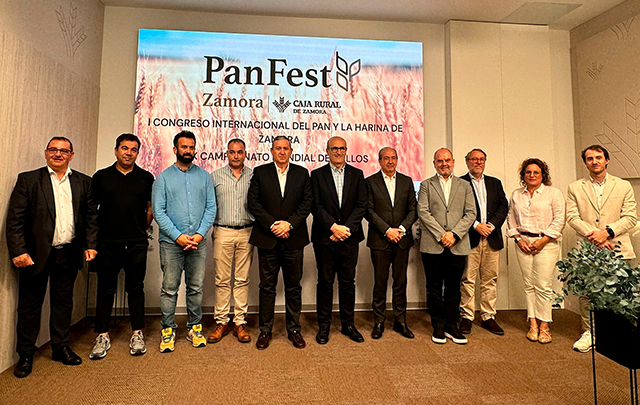
From June 14 to 16, Zamora will become the capital of bread, grains, and flour
More than 50 bakers, flour industry executives, and grain experts from Spain, Portugal, Italy, Georgia, Argentina, and Andorra will examine the present and future of bread from the perspectives of gastronomy, science, agriculture, and cultural heritage.
News
Zamora is hosting the First Bread and Flour Symposium, a prelude to the major PanFest 2027
This inaugural symposium will highlight the role of bread in haute cuisine, featuring several chefs who champion the culinary value of this product, including Samuel Moreno and Luis Alberto Lera.
News
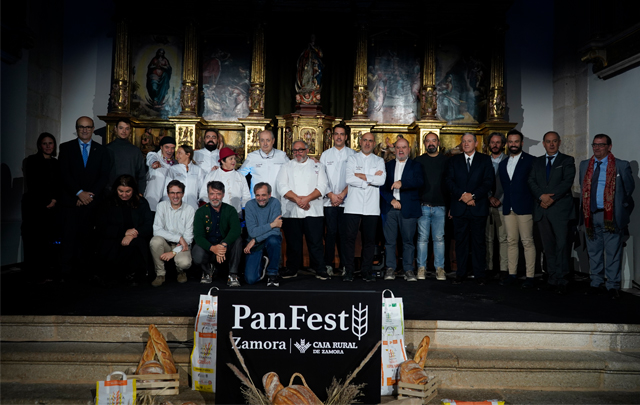
PanFest was created with the goal of establishing Zamora as the world capital of quality bread and flour
The project brings together farmers, millers, bakers, and chefs to promote high-quality flour and bread as part of our cultural heritage.