News
At PanFest, millers and bakers are calling for knowledge to be shared in order to preserve and promote Spanish artisan bread.
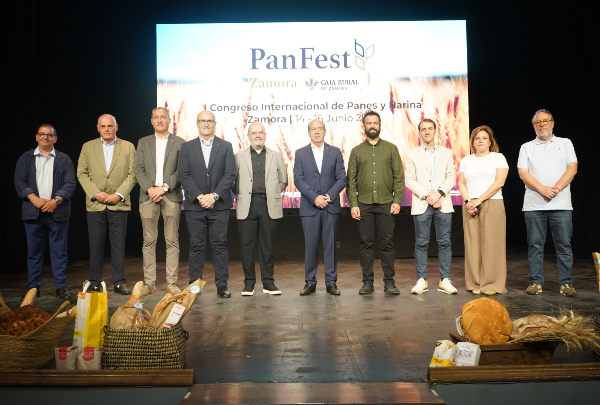
“Like wine, bread must reflect the land from which it comes.” The baking industry is calling for a commitment to identity and local wheat varieties, as well as products that are linked to the local terroir.
The 1st PanFest Zamora International Bread and Flour Congress has been welcomed by the sector as a long-awaited event, providing an opportunity to exchange knowledge and discuss the sector's aspirations and challenges. Most importantly, it is a chance to begin reviving and promoting an immense gastronomic heritage that is at risk of being lost: artisan bread. "If Murcia's ground pepper cake were Italian, there wouldn't be enough influencers to promote it online. However, like many breads and bakery specialities in Spain, it goes unnoticed,” said Ibán Yarza, Spain’s leading bread expert, in his opening address at the congress.
The time has come to put a stop to this and usher in a new era in which identity, quality, and the transmission of knowledge will give Spanish artisan baking the prestige it deserves. Yarza opened proceedings with a passionate and knowledgeable presentation, setting out challenges for society as a whole, starting with artisan bakers. He asked them to “document, record and pass on” their production processes, and he continued with restaurateurs, chefs and communicators — particularly journalists, his own profession — urging them to abandon the “broad brush” in favour of knowledge and rigour.
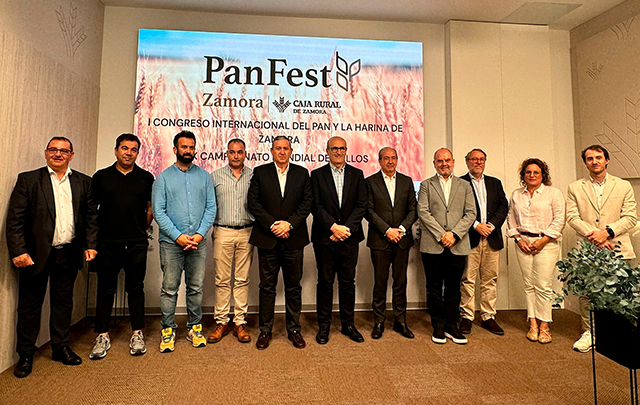
At the opening of PanFest earlier today, Cipriano García Rodríguez, the managing director of Caja Rural de Zamora — the organisation behind the event alongside Vocento Gastronomía — pointed out that this conference could establish Zamora as a national and international benchmark in the world of flour and bread. He was referring not only to the province’s long-standing cereal, flour and bread-making culture, but also to the growing interest from the professional world. The institutions are also aware of Zamora’s potential as a key location for launching this revolution, and their attendance marked the beginning of the congress. Those in attendance included Emilio Fernández Martínez, Vice-President of the Zamora Provincial Council; Fernando Prada Antón, Regional Delegate of the Castile and León Regional Government; and David Gago, Deputy Mayor of Zamora City Council.
At the opening, Benjamín Lana, the managing director of Vocento Gastronomía, called for a collective effort to improve bread quality. “Here we are talking about bread and flour. Until recently, we only spoke of bread. We are going to work across all areas, from the most technical to the most popular and traditional,” he announced.
Ibán Yarza forcefully echoed that call. In a memorable and passionate presentation, he painted a comprehensive and accurate picture of the state of artisan bread in Spain, bombarding the audience with questions and tasks and not shying away from the most uncomfortable ones. ‘I am concerned about the homogenisation of bread. Not only is there a neglect of the diversity of traditional breads, but modern artisan breads are also becoming uniform.
One style has become established that is the same all over the world,” he said. In order to revive the culture of bread, the sector must share knowledge and improve its techniques. "Training, documentation and record-keeping are essential because in baking, the recipe is nothing; the procedure is everything," he said.
The roundtable discussion, 'Integrating Artisan Bread into Haute Cuisine', brought together four experts: Toño Rodríguez from La Era de los Nogales* in Sardas, Huesca; Marc Segarra, the executive chef at Abadía Retuerta Le Domaine and head of the Refectorio* restaurant kitchen in Sardón de Duero, Valladolid; Jesús Monedero, the chef and baker at Palio in Ocaña, Toledo; and Florindo Fierro, the master baker and trainer at the Escuela de Molinos de Zamora. The speakers emphasised the importance of bread reflecting its region. “A very local bread adds value and showcases the area’s traditions,” Marc Segarra explained. Florindo Fierro emphasised that “bread consumption in a country is directly proportional to the quality of the bread and the culture surrounding it”. Regarding the possibility of improving bread service in restaurants, Florindo Fierro called for bread to be treated with care from the moment it arrives from the bakery until it is served. Jesús Monedero believes it is important to inform customers about the type of bread and the baker’s name. Panfest presenter Alberto Bombín offered another key point: 'When customers ask about the bread served at the table, restaurateurs will have to take care of that product'.
The mistreatment of bread in restaurants was discussed further during a subsequent round-table discussion moderated by José Carlos Capel, the honorary president of Madrid Fusión and a pioneer in the field of food criticism for his evaluation of bread in the hospitality industry. The panel comprised the renowned bakers Elisabete Ferreira (Pão de Gimonde, Portugal); Domi Vélez, named the World’s Best Baker in 2021 and the driving force behind El Horno de Vélez in Lebrija, Seville; Ángel Ruiz from Panadería Ruiz Benayas in Maqueda, Toledo; and Daniel Jordà, director of Panes Creativos in Barcelona. “Bread is treated poorly in the hospitality industry because chefs regard us bakers as the lowest of the low. Until they regard our work as equal to theirs, they will never treat the product with respect,” reflected Domi Vélez.
He also emphasised the importance of bakers talking about their products themselves, building teams, and passing on their knowledge. “Many bakers work behind closed doors for fear of their recipes being stolen. However, I have put together a team, and I benefit from their passion and interest. Their work enables me to diversify and grow,” he said.
The importance of quality
The issue of bread quality in relation to the decline in consumption was another key topic of the conference. 'Some people can only afford supermarket bread,' said Jesús Monedero, who also cited the move away from the Mediterranean diet as a reason for the decline in consumption.
However, Samuel Moreno, chef and co-owner of the Molino de Alcuneza* restaurant in Sigüenza, recalled that “we are experiencing the golden age of baking”. 'We have never made or eaten better bread,' he stated, although he called for greater care to be taken with the identity of breads and flours. 'Fine cuisine must represent the culture, the region, the tradition and the landscape from which it originates.
“Just as we work with wines from our land, we should treat bread as a product that is intrinsically linked to us and represents who we are,” he said.
This is the spirit behind the work to revive 'barbilla' wheat, a project involving Juan Carbajo Aguirre, the managing director of the four-generation family business Molinos del Duero in Zamora. “Barbilla wheat is a heritage seed that has been preserved by local farmers for decades and is capable of thriving and yielding a harvest even in the poorest soils,” he explained. Carballo added that the ultimate aim of the revival goes beyond the field and speaks directly to the palate. Although barbilla does not possess the superior strength properties of industrial wheats, it offers exceptional organoleptic characteristics in return. These qualities are preserved by Molinos del Duero through stone milling, producing a flour that gives breads a rustic, powerful, and highly distinctive aroma and flavour that connects directly with culinary tradition.
The day concluded with a talk by Italian chef Giuseppe Iannotti (Krèsios**, Telese Terme) on semolina. Iannotti explained the fundamental role of semolina in determining the quality of pasta and how the quality of the raw material and the size of the grain influence not only the texture and cooking properties but also the product's digestibility.
In addition to the theoretical presentations, PanFest provides a platform for professionals in the bread industry, including farmers, millers, bakers, restaurateurs, chefs and journalists, to converse, socialise and debate. Visits to an artisan flour mill and lunches and dinners hosted by Zamoran restaurateurs provide such opportunities. So too does the exchange of ideas with bakers from other countries.
Related news
News
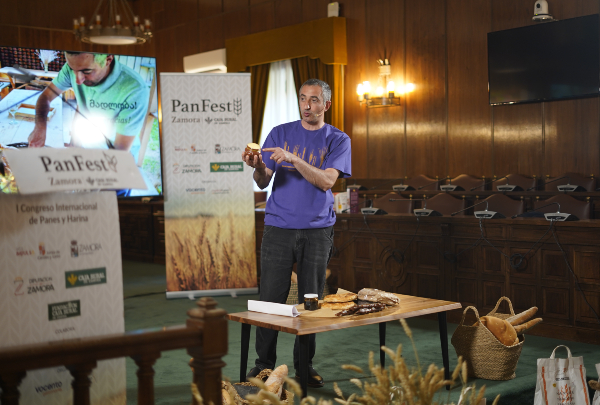
PanFest celebrates bread as living heritage, providing a space where people can come together and foster a sense of community.
Zamora brought the first International Bread and Flour Congress to a close by committing to forge a knowledge network across different trades in order to safeguard bread-making culture.
News
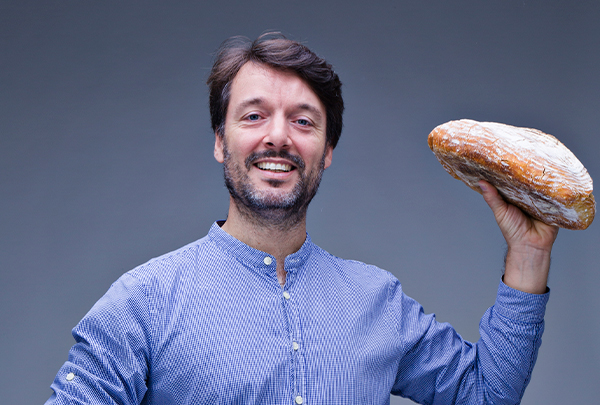
The journalist Ibán Yarza will receive the 2026 PanFest Award
This award recognises individuals in the sector who have contributed to improving the quality of bread and flour, and who have promoted this essential product.
News
A popular food fair and the 9th World Tripe Championship kick off PanFest
The World Tripe Championship, sponsored by Chef Pedro Martino, has chosen PanFest to host its ninth edition.
News
From June 14 to 16, Zamora will become the capital of bread, grains, and flour
More than 50 bakers, flour industry executives, and grain experts from Spain, Portugal, Italy, Georgia, Argentina, and Andorra will examine the present and future of bread from the perspectives of gastronomy, science, agriculture, and cultural heritage.
News
Zamora is hosting the First Bread and Flour Symposium, a prelude to the major PanFest 2027
This inaugural symposium will highlight the role of bread in haute cuisine, featuring several chefs who champion the culinary value of this product, including Samuel Moreno and Luis Alberto Lera.
News
PanFest was created with the goal of establishing Zamora as the world capital of quality bread and flour
The project brings together farmers, millers, bakers, and chefs to promote high-quality flour and bread as part of our cultural heritage.